Energy as a Shared Resource
Every action in Tactical Paper Fortress draws from a single energy pool. Summoning units, reinforcing walls, and activating special abilities all compete for the same limited supply. This design forces constant trade-offs: spend heavily on early defenses and risk running dry later, or hold back and hope the current wave doesn't overwhelm you. The tension between immediate protection and long-term sustainability defines each match.
Reading Enemy Formations
Enemy waves don't follow a fixed script. Early levels use straightforward approaches, but later stages mix multiple enemy types that demand different responses. Players who watch how enemies move and where they concentrate their forces can adjust unit placements between waves. That habit of observing and repositioning matters more than any single defensive setup, because no one formation works across every scenario.
Endless Mode and Sustainable Play
An endless mode extends the core loop into an ongoing series of increasingly difficult waves. Here, quick victories give way to rhythm: collect resources, deploy units, adjust positions, repeat. The mode rewards players who build strategies that hold up over many rounds rather than peaking early. It also offers a lower-pressure space to refine approaches without the goal of finishing a specific level.
Paper Aesthetic and Readability
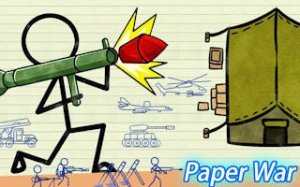
The paper-crafted visuals give the battlefield a handmade quality. Characters and structures appear as folded paper creations, which keeps the tone light even when the strategic pressure is high. That clarity serves a practical purpose too: each unit type is distinguishable at a glance, helping players track positions and make faster decisions during busy waves.





Editorial Notes