Core Gameplay Loop
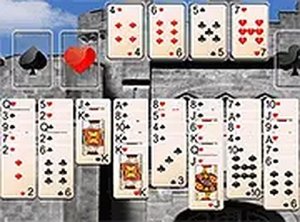
Card Stack Solitaire Challenge centers on moving all cards to four foundation piles, each built up in suit from ace to king. On the tableau, players arrange cards in descending order by suit, creating sequences that can be moved together when correctly ordered. Four free cells act as temporary holding spots for cards that block progress, giving players more control over the layout. Empty tableau spaces can accept any card or sequence, which helps reorganize the board for better moves.
Strategic Depth Through Free Cells
The free cells are the heart of this game's strategic layer. Unlike standard solitaire, where blocked cards can stall progress, here you can store up to four cards in these cells to clear paths. Deciding which cards to park and when to retrieve them requires careful planning. For example, holding a king in a free cell might free up a column for a sequence, but using that cell for a lower card could speed up foundation building. This mechanic adds a satisfying puzzle element without overwhelming complexity.
Visual and Accessibility Design
The interface is clean and uncluttered, with cards that are easy to read on both desktop and mobile screens. A full-screen mode lets players focus entirely on the game, and the responsive layout ensures touch controls work smoothly on tablets and phones. No downloads or registration are required, making it simple to start a game from any browser. The visual style is understated, letting the gameplay take center stage.
Progression and Learning Curve
New players can grasp the rules in minutes, but mastering the game takes practice. Each deal presents a unique puzzle, and the difficulty varies based on how cards are initially arranged. Over time, players develop an eye for spotting sequences and anticipating how moves affect future options. The game rewards patience and foresight rather than speed, making it suitable for casual sessions or longer strategic play.
Tips for Improving Your Play
Prioritize freeing aces and low cards early to start foundation piles, as this creates more space on the tableau. Use free cells sparingly—only for cards that truly block progress, not for every minor inconvenience. Look ahead several moves to avoid trapping a card in a free cell that you need later. Empty tableau spaces are valuable; try to create them by moving sequences, then use them to reposition high cards. Regular play sharpens your ability to evaluate the board quickly.